Wots goin’ on?

Contribution by Alec Anderson

The following is a newsletter sent to the teams in January 2002:

It has been a long time since my last communication to you with an update on what is happening with our fleet, so here goes. We are still growing even if we do not now see and control all the operations ourselves.

We now own three ATR 72 airplanes (brand new) and lease them to Jet Airways in India. This is a new business venture for us and may well open new doors in the future.

There are also our two 727-200 freighters in Ireland, operated by Air Contractors. We may see one of these out here for a C-check later in the year.

Air Liberte are still happily operating our four MD airplanes in France and it seems changes within their company are over for the time-being and hopefully these airplanes will be trouble-free for them. Our other MD customers, Spirit Airlines, in America have had some difficult times since the September 11 terror activities, but now also seem to be on the path to stability again. It is up to us to now manage how these guys look after our assets so that they are well maintained and keep their values.

The 737-200 fleet at SAA is also now ours and on lease to them, again asset management for these airplanes only. The maintained fleet of 737-200S is another storey, here we look after Air Namibia, Comair, and SAA Cargo on their daily operations.

The addition of 737-400 airplanes began in middle January and it is comforting to know that Comair has such faith in us to trust us to partner them in this venture. The overseas advisory techs we have here are for a limited time only. Make full use of them, they have vast experience and are only too willing to share it.

727 Freighters continue the nightly operations. NPX is no longer ours, but has been sold and is leased back in as we need it, this does not mean we treat it any differently from any other aircraft we maintain!

727 Passenger operations. With the introduction of the Kulula operation, the 727s got a second wind and will grace the skies for some time to come. The BA/Comair operated 727 fleet will be phased out as the 737-400s arrive. As these airplanes are for sale, checks will have to be done out of phase for marketing purposes, so expect the unexpected, in the form of storage programmes, painting, CPCP, and no warning inputs!

The CASA fleet, gone but still here. The airplanes are sold, however we are contracted to support the Comav operation in Namibia. These operators are very value conscious and demand a high service level from us. We need to ensure they are successful with these aircraft as there is potential for future further business and airplane transactions.

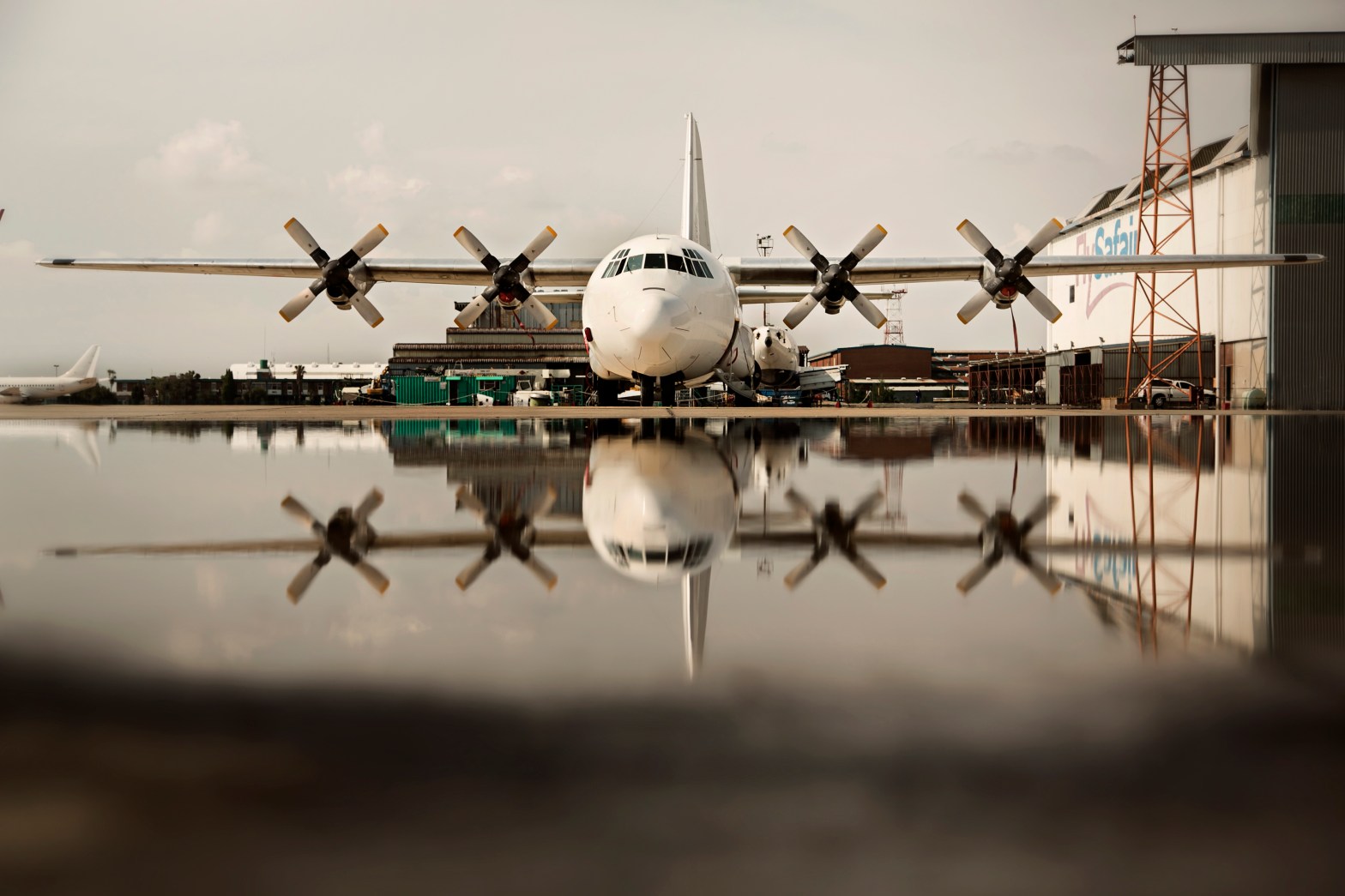
Now the Hercs, everyone’s favourites.

  • ZS JIY is leaving Timor and en route to Kinshasa for UN work.
  • ZS JAG is still in Timor for some time yet.
  • ZS JIX is on EARL duty and has had some big corrosion findings. Ian, if it flew more this would not happen!
  • ZS JIZ is down from Kinshasa for maintenance.
  • ZS RSC is in the Afganistan theatre flying Red Cross missions, difficult to support, so make sure the parts you need are provisioned in plenty of time.
  • ZS JVL is in Marshalls for a check. Rob H is keeping an eye on costs for us.
  • ZS JIV and ZS RSI are based in Europe flying for OSRL and Fedex.

The Paris Dakkar this year went smoothly as did our Antarctic venture.

In the changing light over aviation, all our customers are now demanding better and more efficient operations. Delays simply cannot be considered to be unavoidable. All technical delays need to be considered as unacceptable and it is up to all of us to make sure they do not happen, whether out of a check, in a desert or on the apron. Listen to what the customer wants, after all they pay your salary! Do not accept bad performance from your workmates, it puts more load on you and makes us all look bad. Come up with suggestions and improvements, because you are closest to your problems.

All the new equipment coming in now costs a fortune in Rand and Dollar terms, do not let this stuff be “borrowed”, abused or lost. It is your stuff for your future, take care of it. We will be installing a closed circuit TV system in the near future to try to control the petty thieving going on, be aware that this is for your safety and keep your eyes open for culprits.

Thanks guys 

Alec and Ebie
Fast Food in the Drought

Contribution by Alec Anderson

The start of another day in Lockichogio in the north of Kenya begins at 06:00 local. The airplane, an L382 or civilian Hercules, sits squat and heavy on the apron, fuelled and loaded the night before. At six sharp the APU springs to life, the whining note singing out to all the locals around the airfield that the day’s events are about to get underway. First number 3 engine and then 4, 2 and 1 are swung into life. The acrid smell of jet fuel exhaust drifts over the hard stand. There are no customs clearance formalities in this remote, desert area. This is the end of the road north out of Kenya; the trucks can go no further.

06:15 and we are charging down a still darkened runway into the African sunrise. With 18 tonnes of maize meal on specially prepared pallets we are about to perform one of the few civilian approved airdrop activities in the world. The patented release system gives us pinpoint accuracy and many a Sudanese rural resident would not be alive today but for the World Food Programme and Safair working on the Fast Food operation. An hour and a half later we approach the drop zone. De-pressurize in the descent and at 250 foot we line up. The heat is felt throughout the airplane as the massive ramp opens. Some buffeting from thermals and a hazy view brought on by the early morning heat haze make the run in difficult. All eyes on the GPS, and the countdown is on. A lot of bird activity from yesterday’s drops. The spilt maize brings in sparrows and rats, which in turn bring in hawks, eagles and vultures. A bit of gentle avoidance as the birds get disturbed and rise up lazily as we scream overhead.

A tap on the shoulder, the moment of release and all of the first stick is away. The drop is on target and 9 tonne is delivered. Line up again, do it again and another 9 tonne lies on the drop zone. 99% recovery is the estimate from the aid workers on the ground; one or two bags had burst on impact.

As we leave the drop zone, the distribution is beginning already. An hour and fifteen minutes [we are light now and make better time] we land at “Locki.” Although it is only mid morning the temperatures are around 39 degrees Celsius so everyone is sweating and feeling listless. The team of 30 odd local loaders arrive. A truck, belching black diesel smoke, backs up to the “Herc.” The chanting, sweating team hand load the 50 Kg bags into the two drop sticks. Mechanised loading is slower than this, the time honoured African method, and the odd bag that goes missing is still going to fill a hungry belly, so no loss there. Sweat pouring, overalls hanging in a sodden mess, the loadmasters work to restrain the load for the take-off.

Our servicing team go over the “Herc” in the turnaround routine. The skin is too hot to touch after half an hour, so working quickly while the airplane is cool from flight has its advantages. The fuel browser arrives and the Flight Engineer starts pumping gas. Soon the sweet, sour smell of jet fuel permeates the whole clamouring mass of people, slaving on the godlike airplane. About forty minutes later all is done. The Captain has his new tasking and, once again, the eerie yodelling of the APU is heard in the dusty African bush. Fifteen minutes later, and airborne again, the aircon runs at maximum cooling as the crew drink in the cold blast of fresh air.

Back at “Locki” the heat is softening the tar on the roads. The loaders hide from the sun under the truck, any shade is better than none, and there are precious few trees in the area. As the roar of the four Allison engines fade away, the next load is prepared and weights checked. It may be the middle of Africa, but certain basic safety factors must be enforced to ensure a successful operation, and people always think that if there is space in the Giant Hercules then it should be filled. Here at three thousand feet above sea level with average temperatures around 40 C, the weight limit is critical. Bad weather means extra fuel and that means less payload. Every load, every rotation, is a life supporting issue in these vast empty tracts of drought ridden Africa. Eight years of no rains has wreaked havoc on the local subsistence farmers. The majority of the world has forgotten the plight of these starving, abandoned Sudanese people-new disasters and relief efforts in Eastern Europe, East Timor and Afghanistan steal the limelight. Africa with all its misery will always be there.

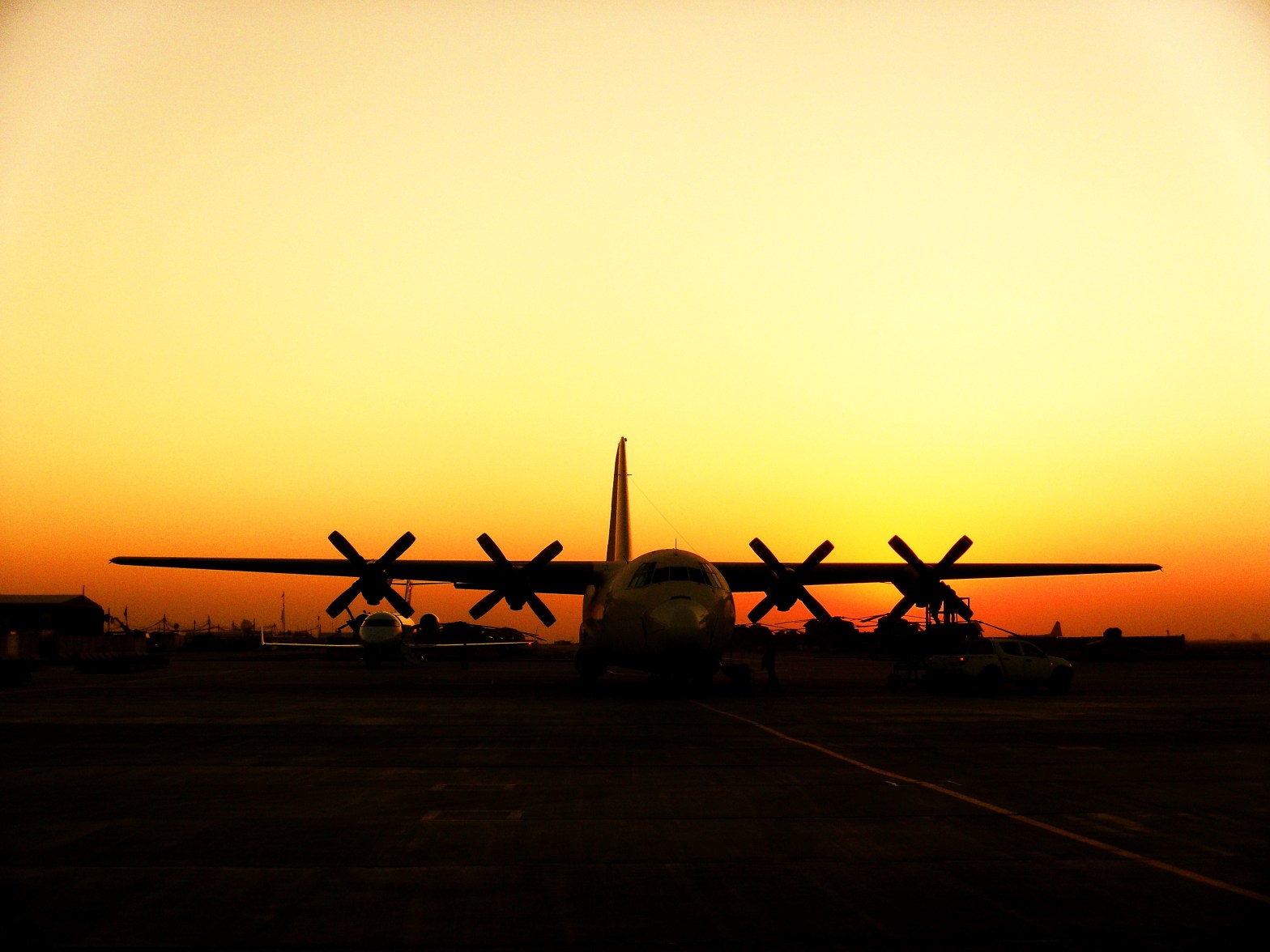
 Two more rotations for the day, and it’s time to put the Herc to bed. The days minor snags are tended to, a wheel changed, oils uplifted, fuelling and loading carried out, and we are ready for tomorrow. As the crew transport, a 20 year old VW with no windows, arrives to take us to the camp, I take a backward glance at the mighty Hercules, and the setting sun, turning the horizon bright red, burns an indelible image of that squat monster, sitting quietly on the apron, onto my retinas. I know this is an image I will see many times as I drift of to sleep.

A few beers around the barbeque, check the camp beds for spiders and other bugs, mosquito nets set and it is time for a well-earned rest for the team. Malaria, snakes, scorpions, spiders; all these are everyday problems in “Loki.” Nevertheless, the work is exciting and challenging, and the sense of having achieved something worthwhile, while seeing acres of starving people, is a humbling experience.

Submit your own story

Please submit your own stories and images either by email to wkruger@safair.co.za or by uploading them using our online submissions tool. Click the appropriate option below.

ZS-RSF Gets a New Life!

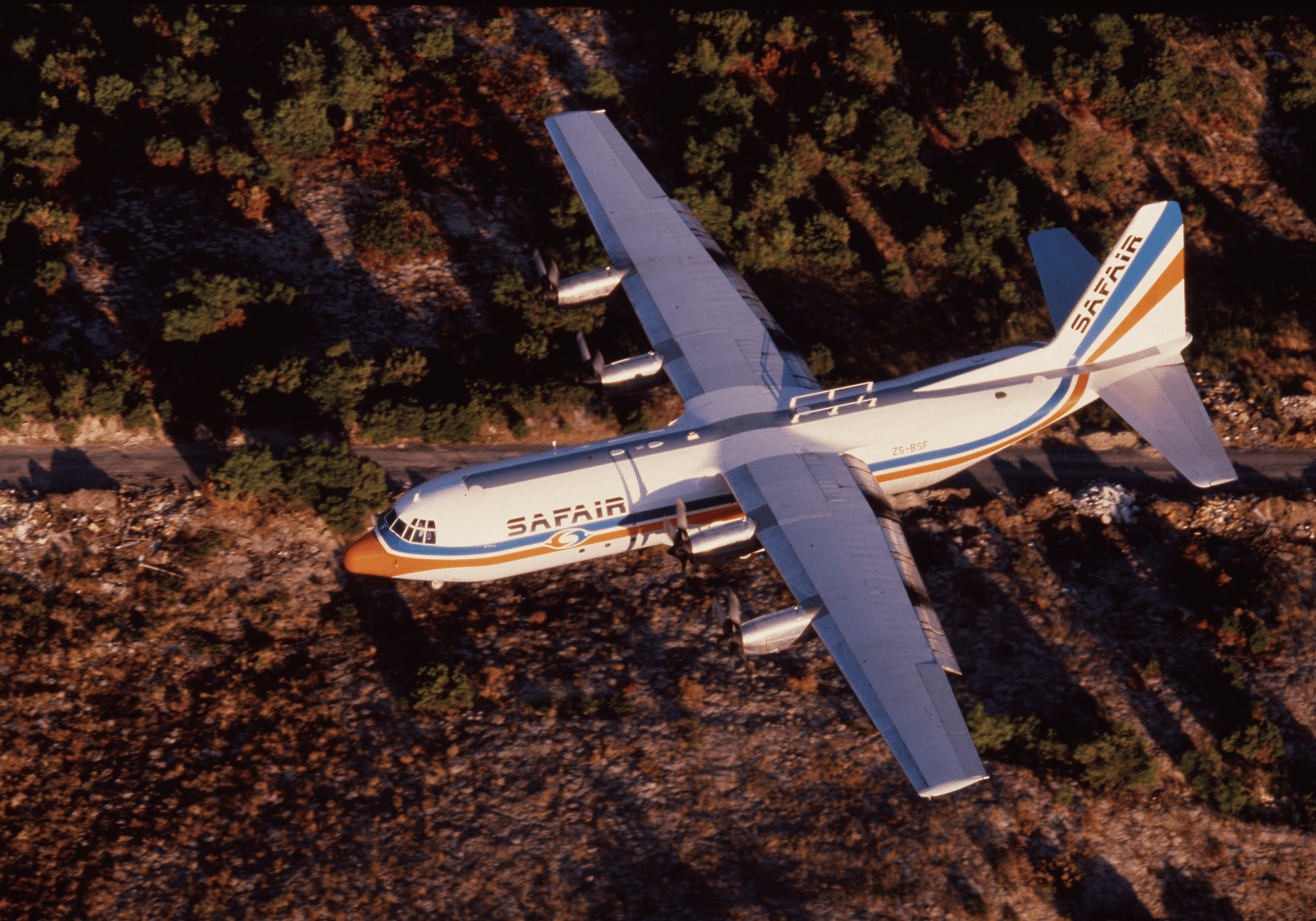
Lockheed Hercules ZS-RSF, was manufactured in 1974, and is affectionally known as “Foxtrot”. This aircraft has achieved the 50 000 flight hour mark. She has been involved in Aid and Relief markets, Airdrop missions, Arctic operation, general freight duties, support of NGO activities in troubled regions, and has visited all the world’s continents. Yes, she has seen hot deserts, freezing polar-regions, wars, floods, earthquakes, droughts, famines, disease and other natural disasters as well as human conflict situations.

At 50 000 flight hours, the Centre Wing is declared time-expired and needs to be replaced. Working with our partners, Airod, in Malaysia we have inducted ZS-RSF for the wing change and an accompanying major check and repaint. This is a massive undertaking and requires work to incredibly high tolerances to ensure the airplane remains within design specifications. The manufacturer, Lockheed Martin, are also partnered with us on the project to ensure all airworthiness aspects are maintained.

This project will take approximately four months, after which ZS-RSF will return to its work in Africa, providing support to the United Nations missions.

It is a testament to our flight crews, technicians and support teams that a forty-two year-old airplane is able to deliver safe and reliable service and bring hope to many of the people facing humanitarian challenges around the world.

Given the life extension of 25 000 flight hours that this project will provide for this airplane, ZS-RSF is sure to grace the skies for a long time into the future.

Go Foxtrot!

Submit your own story

Please submit your own stories and images either by email to wkruger@safair.co.za or by uploading them using our online submissions tool. Click the appropriate option below.

Special Memories from Previous Safair CEO

Contributed by Dave Andrew

My first encounter with a Herc was back in the early 80s as a national serviceman returning from South West Africa following a camp in Ondangwa. Little did I know at that stage, that that aircraft type was going to play such a significant part in my career.

I joined Safair in 1990 and spent the first eight years of my career on the technical side of the operation, firstly in Engineering and Technical Services and later in Quality Assurance and Training before finally moving into a role as Senior Manager of Engineering and Maintenance Planning.

Most of this time was spent working on the Hercs, from developing modifications to the aircraft, upgrading the primary navigation systems from CMC Omegas to Honeywell HT9000 GPS, and developing a system to keep accurate records of hours flown by our customers to prevent them from cheating us on the actual utilisation!

A lot of time was also spent developing interesting new configurations that facilitated much needed commercial contracts for our customers such as air drops for the World Food Program, bulk fuel tank operations and so on. I was also part of the technical team that supported the first operation to Antarctic, for Adventure Network International out of Punta Arenas in Chile as well as the Paris Dakar Rally logistic support operation, to name a few adventures.

During this time the Commercial Team, under Hugh, had secured a contract through Hunting Cargo Airlines and Chapman Freeborn to place a Herc on standby in the UK for a company called Oil Spill Response (OSRL). I was fortunate enough to be responsible for the technical side of the introduction of this contract which included starting the operation in East Midlands along with Neville Desselss, Captain John Pillans and Captain Phillip Roussou. Shortly after this we secured a short-term “damp lease” for one of the Hercs, ZS-JIX, to a UK company call Heavylift for a similar oil spill response contract for a company call East Asia Response Limited (EARL), based in Singapore.  Little did we know at the time that within the year we would have both of these contracts directly through Safair and that both of them would run, with numerous extensions, for more than 15 years.

During that time I also had the opportunity to work with Hugh on Safair’s shortest Dry Lease ever. A one-month lease to North West Territorial Air, based in Edmonton and Yellowknife in Canada.

In 1997 we also met and sold our first Hercules aircraft to Lynden Air Cargo, ZS-JJA MSN 4698. JJA became N402LC and is still in service with Lynden Air Cargo today. The start of another relationship that would last right through to this day.

In 1998 I had the privilege to take over the commercial and marketing responsibility for Safair, when Hugh moved to Ireland to set up Air Contractors, which became todays ASL. I spent the next 10 years placing the Hercs on contracts all over the world including in Antarctica for ANI and the Italian Government, which only ended recently. Other placements included Kosovo for the Austrian Government, Peru, Indonesia and all over Africa.

Safair’s long-standing relationships with the various aid and relief organisations like the United Nations, the World Food Programme, the Red Cross and numerous others has seen the Safair fleet of Hercules aircraft operated in just about every area of conflict and natural disaster over the last 30 years or more.

In many ways the Hercs are probably the last “adventure operations” left in commercial aviation and are totally different in almost every way to normal commercial aircraft operations. Having attended many of the crew briefings at the start of various contracts or missions, it always amazed me at the project nature of the Herc activity. Crew would literally be called in and briefed on what they had to do, be appointed an aircraft, and off they would go to some remote part of the world, where they would perform any number of operations. They would then return a few weeks later to hand over to another equally enthusiastic team whick would continue with the project.

Our teams that operate, maintain and generally take care of the Hercs are a committed team of adventurous professionals that have changed many lives, particularly in the aid and relief operations, for many years.

However, it hasn’t always been easy, and there have been times when we had more aircraft parked than we had flying. Days when we had to hide the aircraft behind the hangers during board meetings so that our shareholders at the time couldn’t see how many aircraft were available. The size of the fleet over the years has also varied significantly from the initial sixteen aircraft that were purchased from Lockheed down to as few as four at one stage and then back up to ten in the mid-2000’s when we acquired a fleet of five additional aircraft. Some of them were original Safair aircraft which had spent some time with Transafrik.

Submit your own story

Please submit your own stories and images either by email to wkruger@safair.co.za or by uploading them using our online submissions tool. Click the appropriate option below.

Safair Hercules to the Rescue!

Contributed by Koenie van der Walt

Over the years Safair has always excelled during time of crisis – sometimes under extremely challenging and dangerous conditions, but always completing every operation professionally.

The political climate in Southern Africa during the eighties and early nineties was very uncertain and volatile. During this period Safair was often called upon by the international community at very short notice to assist with various operations.

Early one morning I received a telephone call from the Department of Foreign Affairs who had been contacted by the French Government with need to mobilise a Hercules to be dispatched to Moroni, the capital of the Comoros. We were familiar with the Comoros, having flown many flights to Moroni, with loads of building equipment and material for the Sun International Hotels that were built at the time. It wasn’t a big deal.

The difference with this flight though was that it would fly empty to Moroni and bring back passengers to Johannesburg who had to connect to the Union de Transports Aériens (UTA), service to Paris from Johannesburg that same evening. Some of the conditions were that we had to carry sufficient fuel from Johannesburg to Moroni and back to Johannesburg since there was no fuel available at Moroni. Another condition was that it had to be an all male crew, so our female cabin attendants could not be on the flight as with our normal passenger flights.

Fortunately one of the Hercs had the long range pylon tanks fitted and had been operating with them for a while. The Flight Planning Department quickly did the sector analysis and all was found to be in order to carry round-trip fuel.

The standby crew, plus additional crew were called in and the Herc departed shortly thereafter from Johannesburg for Moroni. The Herc returned to Johannesburg in the late afternoon with none other than Colonel Bob Dennard, the well known and sometimes infamous, French soldier and mercenary with his group of other mercenaries for onward travel to Paris.

Once again, another successful Hercules mission carried out professionally by a dedicated and passionate Safair team!

During the transitional peace period leading up to the Angolan elections, after many years of civilian war in Angola, Safair was once again called upon by the broader international community to come to the rescue. The peace process had been violated with skirmishes which broke out in Luanda between the Movimento Popular de Libertação de Angola (MPLA) and The National Union for the Total Independence of Angola (UNITA).

The South African Government, via the Department of Foreign Affairs, was called upon by many different Governments, who had diplomatic staff based in Luanda, to assist with the immediate evacuation of their staff.

The different Safair departments got together to plan this evacuation operation. Insurance underwriters in London were advised about the situation and asked for insurance cover to send an aircraft in to collect these people. Permission was approved by the underwriters to land in Luanda, with the explicit condition that we be on the ground for a maximum of only three hours per flight. The South African Aviation Authority (then the SADCA) was informed and the Director of the immediately gave approval for the operation to bring back the diplomatic personnel, subject to all the existing aircraft configurations and crew regulations being conformed to.

At the time we only had one Herc available which departed empty form Johannesburg for Luanda. We also had ZS-LSH, a Safair Boeing 707 which was doing a commercial charter from Johannesburg to Entebbe. We managed to ferry that aircraft across to Luanda to collect the remaining stranded people.

I clearly remember the Friday afternoon at Waterkloof Air Force Base proudly watching the flights arrive. The Boeing 707 came in first, followed by the Hercules. Both landed safely with full loads of passengers along with a few dogs and cats.

Naturally the different diplomatic personnel from Luanda were relieved to be safe in South Africa, but also sad having to leave so many local staff and possessions behind in Angola. The Department of Foreign Affairs as well as their international counterparts were highly complimentary towards Safair for this monumental exercise carried out with distinction.

Submit your own story

Please submit your own stories and images either by email to wkruger@safair.co.za or by uploading them using our online submissions tool. Click the appropriate option below.

Landscaping the Gardens of the Presidential Palace at Gbadolite, DRC

Contributed by Koenie van der Walt

The well known horticulturist Keith Kirsten had a weekly television program on South African TV during the mid 1980s. Keith Kirsten was contacted by the Managing Director of a well know SA Company, asking if he would be interested in doing the landscaping of the gardens at the palace of President Mobuto Sese Seko at Gbadolite on the banks of the Congo River in the north of the former Zaire, now the Democratic Republic of the Congo.

We attended several meetings in Johannesburg, representing Safair during tat October. It was in either 1987 or 1988 I can’t be absolutely sure of the year. It was determined that there would be a “few” flights from Johannesburg, via Walvis Bay and Kinshasa, to Gbadolite. We were to carry all kinds of goods but mainly plants for Keith to use for his landscaping project.

Initially the “few” flights was set to be about 4 or 5 trips. We decided to base our quotation on using the only L100-20, ZS-GSK to perform this operation. ZS-GSK was the first aircraft in the Safair fleet, and unlike the rest of the fleet, it was a -20 and not a -30, meaning it had 1 pallet position less than the -30s.

We presented our proposal and a few days later and were informed that we had the contract to carry the cargo to Gbadolite. The only challenge was that the landscaping project had to be finished before Christmas due to the fact that President Mobuto had invited various dignitaries, including several Presidents, to his palace at Gbadolite for Christmas.

The first flight departed in November and the four or five flights increased well into the twenties. At a very late stage Mbuto decided he also needed a chicken hatchery to be added to the project. This operation was completed successfully with the last flight on the 23rd December carrying live adult chickens, week-old chicks and eggs for the President to impress his guests at Christmas!

Submit your own story

Please submit your own stories and images either by email to wkruger@safair.co.za or by uploading them using our online submissions tool. Click the appropriate option below.

Ngala Private Game Reserve Runway Opening

Contributed by Koenie van der Walt

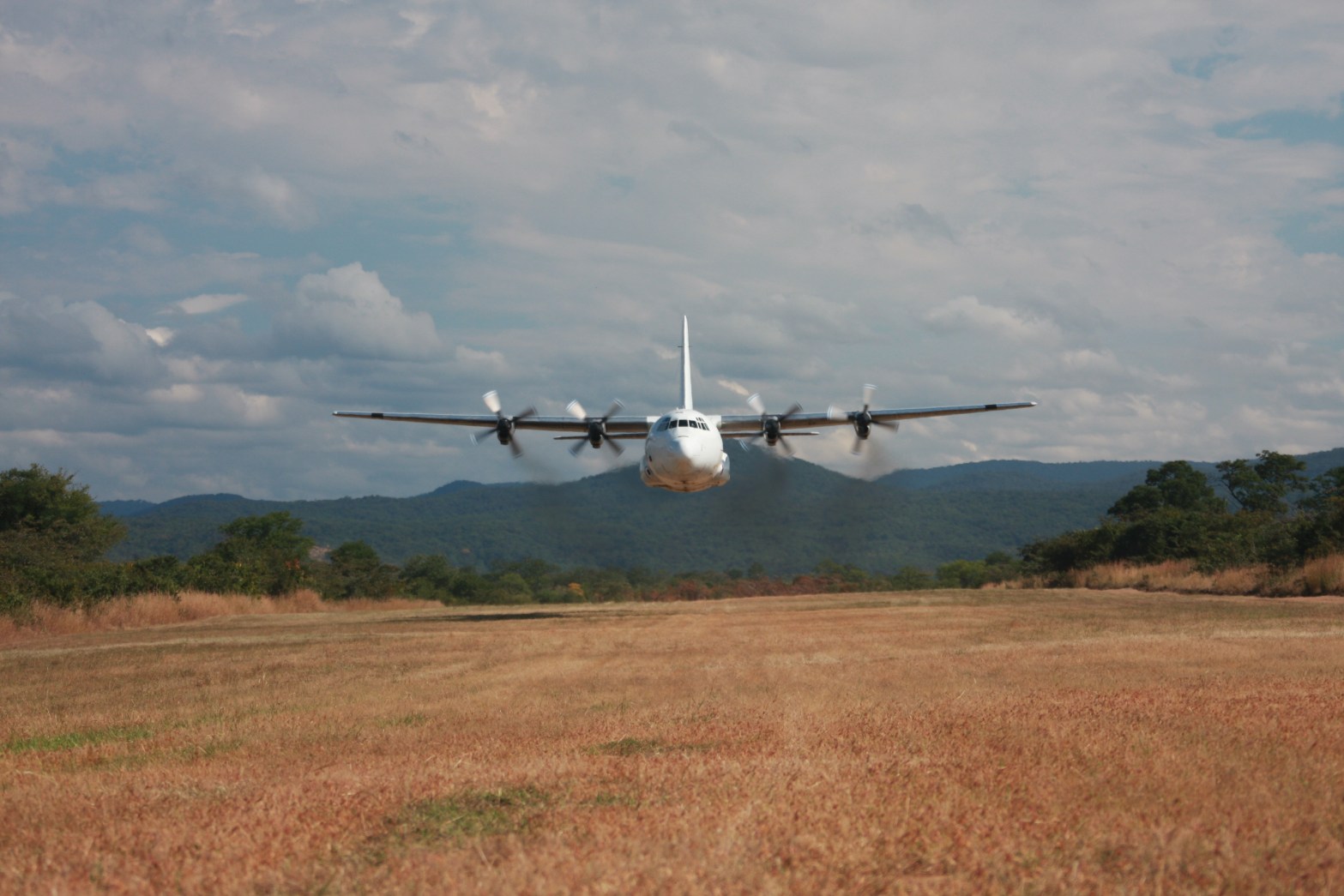
The Hercs became very popular at one time for use in and out of short unpaved runways in the bush, carrying both international as well as local incentive groups. To expand our services within this particular market sector of carrying incentive groups, Safair approached the Vartys who owned Ngala Private Game Reserve with the idea of flying passengers directly into and out of a gravel strip at Ngala.

An airfield inspection was arranged for Captain Bugs van Rooyen, the Chief Pilot at the time, to inspect the existing airstrip and to make recommendations to upgrade it in order for the Hercs to operate there safely. Bugs flew in and out of the strip in a light aircraft so as to familiarise himself with it both from the air as well as on the ground. Bugs completed his report, noting the requirements for the Herc operation and Ngala did the actual work. Another inspection followed with one additional requirement – a small tree had to be removed close to the turning circle.

Several weeks later the first Herc flight operated safely and successfully in and out of Ngala with a South African Financial Services Company incentive group on board. More charters followed to Ngala and soon the Hercs were serving other game lodges in South Africa and as far afield as Mokuti Lodge in northern Namibia.

Submit your own story

Please submit your own stories and images either by email to wkruger@safair.co.za or by uploading them using our online submissions tool. Click the appropriate option below.

Fiat Uno Italian Incentive Group 1988

Contributed by Koenie van der Walt

Due to the Hercules aircraft excellent short take off and landing (STOL) capabilities the Safair fleet featured in some ground-breaking operations to carry civilian passengers. This was at a time where the civil aviation regulations were much more relaxed, compared to what they are today.

Although the Hercs are predominantly freighter aircraft, we successfully marketed and positioned the them as an exceptional African bush experience aircraft, which could safely operate in and out of short, unpaved airstrips to carry passengers to exotic African bush destinations from the mid 1980s to the early 1990s. Passengers loved the experience even though flights had to be limited to a maximum of 2,5 hours duration as a result of the noise levels within the cargo compartment! Cabin attendants, trained ladies in Safair uniforms, did the passenger briefing and announcements using a loudhailer to communicate with the passengers during flight.

We had standard economy class airline seats mounted onto aircraft pallets which would be rolled into the cargo hold of the aircraft on a roller system fitted to the aircraft floor. No other aircraft could carry 88 passengers in and out of short airstrips like the Herc could.

Working closely with a South African Destination Management Company (DMC) we assisted them in being awarded the FIAT Uno Italian incentive group. The group consisted of 320 passengers, split into two back-to-back groups of 160 passengers each. This turned out to be a real challenge for Safair, not because of the Herc operation, but because of South African Airways monopoly and objection to the use of the Safair Boeing 707, ZS-LSF which had to operate the route between Johannesburg and Mauritius.

The first group of 160 passengers arrived at Johannesburg onboard an Alitalia service. Upon completion of their Immigration and Customs formalities they boarded the two Hercs (ZS-JIY and ZS-JIZ) for their flights to Skukuza, for onward transfer to a number of private game lodges in the adjacent Sabi Sand Reserve. Three days later the group was collected at Skukuza by the two Hercs and brought back to Johannesburg. Upon arrival the passengers of the first group of 160 passengers completed their Immigration and Customs formalities, and boarded the Boeing 707 for their three day stay in Mauritius.

The second group of 160 passengers had arrived onboard the Alitalia service at Johannesburg. Upon the second group clearing Immigration and Customs they boarded the two Hercs for their flights to Skukuza where they were to stay at the same private game lodges as the first group. Three days later the second group was collected by the two Hercs at Skukuza and brought back to Johannesburg. Upon completion of the required formalities the second group boarded the Boeing 707 which had just returned to Johannesburg with the first group from Mauritius. The second group departed Johannesburg on board ZS-LSF for Mauritius and returned three days later.

This operation was a huge success with a very satisfied client. Our company ATP International has been doing work for this South African DMC ever since and we make use of Safair aircraft wherever we can to this day.

Submit your own story

Please submit your own stories and images either by email to wkruger@safair.co.za or by uploading them using our online submissions tool. Click the appropriate option below.

Relocation of Wildlife from Malawi to South Africa

Contributed by Koenie van der Walt

On a spring afternoon in 1986 Ina Hayward, the receptionist at Safair at the time, phoned me to tell me there was a man at reception who wanted to speak to me about chartering a Hercules aircraft. To put the normal procedure into context at the time, I have to mention the following:

We often had enquiries from various people to charter Hercules, most of them never materialising and being far-fetched to put it mildly. the norm was that meeting appointments were normally pre-arranged via telephone for a certain date. So needless to say, I was rather apprehensive when Ina said there was someone at reception who wanted to speak to me.

I asked Ina on the internal telephone line to ask the person for what reason he wanted to charter the Hercules and I could hear the person’s voice in the background telling Ina he wanted to capture certain antelope in Malawi to relocate them to the Kruger National Park.

Being a very enthusiastic nature lover, my interest immediately peaked and I was now ready to meet this person, so I went to reception and met Dr Johan Kriek, a veterinarian, his wife Daleen, and their two young sons, Johann and Jaques.

We proceeded to my office where Johan explained he had obtained a contract from the National Parks Board (now SanParks) as well as the Malawian Government to capture Lichtenstein Hartebeest, Roan Antelope and Sable Antelope in Malawi. The three species would be released in the north of the Kruger National Park, which would be the ideal habitat, particularly for the Lichtenstein Hartebeest which had long been extinct in South Africa.

Within a few minutes of our discussion I was as excited and enthusiastic as Dr Johan Kriek, a lanky vet who dind’t know the meaning of the word “impossible”! This was the start of a lifelong friendship to this day between the two of us!

Johan needed to charter a Herc to carry a helicopter plus a wide variety of equipment, goods, and some personnel from Johannesburg to Muzzy. The Herc would drop them at Muzzy where he would set up his operation and approximately three months later, the airlift operation would commence flying the antelope from Muzzy to the Kruger National Park.

True to Johan’s promise, some three months later a Herc departed with the Safair empty “cattle pens”, and a group of volunteers, from Johannesburg to Mzuzu via Lilongwe. Captain John Pillans, a keen nature lover himself, was in command. The volunteers assisted during the flights to keep the heads of the sedated antelope in the correct position so as to avoid any suffocation.

A tremendous amount of planning went into this operation with so many different people contributing to make it a huge success. Special permission was obtained from all the relevant authorities and two Herc flights were done to carry the Lichtenstein Hartebeest, Roan and Sable Antelope from Mzuzu directly to the airstrip at Punda Maria in the north of the Kruger National Park.

In 1991 the Hercs again featured very prominently when Safair did a second airlift operation for Dr Johan Kriek to relocate 95 Roan Antelope and 65 Sable Antelope. This time we flew the antelope from Lilongwe to Pietersburg (Polokwane) for Johan Kriek’s own project with these species.

Submit your own story

Please submit your own stories and images either by email to wkruger@safair.co.za or by uploading them using our online submissions tool. Click the appropriate option below.

World Skydiving Event Hosted in Quincy, Illinois, USA 1986

Contribution by Koenie van der Walt

During my time as Marketing Services Manager for Safair Freighters and after the name change to SAFAIR I have had the privilege and honour to experience and enjoy many opportunities where the Hercules L-100 fleet of aircraft were used.

Writing about these wonderful machines, it brings back fond memories confirming the extreme versatility of the “Hercs”, as we even to this day, refer to these great STOL aircraft.

Unfortunately I cannot remember the exact dates of all the operations where the Hercs were deployed and served with distinction. During my time very few photos were taken as it had to be done with the old SLR cameras – digital cameras came about later and mobile phones with digital cameras were unheard of! I am therefore relying on my memory, noting the following, which can certainly be elaborated upon by some of my contemporaries at the time.

One such memory relates to the World Skydiving event in Quincy which is in the state of Illinois in the USA.

Safair regularly supplied either one of two Hercules aircraft, ZS-JIZ or ZS-JIY, to Henri and Ursula Schurch of Swiss Boogie, Switzerland to host their annual skydiving event at the end of December at Phalaborwa. Skydivers, mostly from Europe, but also other parts of the world including South Africa, would attend this annual event at Phalaborwa.

Shortly after Swiss Boogie in December 1985 Safair was approached by a group of South African skydivers with the idea of chartering a Herc to be used at a world skydiving event in Quincy, Illinois in the United States. Imagine, a South African Herc to be flown all the way from Johannesburg to Quincy where it would be used daily to lift groups of skydivers to participate in their, shall we say, unusual sport! To cover costs a group of South African skydivers would fly on the aircraft from Johannesburg to Quincy and back. We had standard economy class airline seats mounted on aircraft pallets which were rolled into the aircraft to accommodate the passengers.

An enormous amount of planning went into this operation for ZS-JIZ with three full crews, technical personnel and coordinators to perform this very successful operation. The liaison with the South African Department of Civil Aviation (prior to it becoming known as the SACAA) and the US Federal Aviation Administration (FAA) to obtain their permissions alone was a mammoth task!

I cannot remember the exact route with all the different fuel stops and crew rest from Johannesburg to Quincy, return, but it must have been something like this:

Johannesburg – Walvis Bay – Libreville or Sao Tomé – Abidjan – Santa Maria, Azores – St John’s, Newfoundland, Canada. I’m unsure where we cleared into the USA before moving on to Quincy.

A world record free fall with 120 skydivers connecting in the air to form a star formation before deploying their parachutes was set at this event.

ZS-JIZ with all supporting crew and personnel performed exceptionally well to make this event the huge success which it turn out to be!