Contribution by Alec Anderson
The start of another day in Lockichogio in the north of Kenya begins at 06:00 local. The airplane, an L382 or civilian Hercules, sits squat and heavy on the apron, fuelled and loaded the night before. At six sharp the APU springs to life, the whining note singing out to all the locals around the airfield that the day’s events are about to get underway. First number 3 engine and then 4, 2 and 1 are swung into life. The acrid smell of jet fuel exhaust drifts over the hard stand. There are no customs clearance formalities in this remote, desert area. This is the end of the road north out of Kenya; the trucks can go no further.
06:15 and we are charging down a still darkened runway into the African sunrise. With 18 tonnes of maize meal on specially prepared pallets we are about to perform one of the few civilian approved airdrop activities in the world. The patented release system gives us pinpoint accuracy and many a Sudanese rural resident would not be alive today but for the World Food Programme and Safair working on the Fast Food operation. An hour and a half later we approach the drop zone. De-pressurize in the descent and at 250 foot we line up. The heat is felt throughout the airplane as the massive ramp opens. Some buffeting from thermals and a hazy view brought on by the early morning heat haze make the run in difficult. All eyes on the GPS, and the countdown is on. A lot of bird activity from yesterday’s drops. The spilt maize brings in sparrows and rats, which in turn bring in hawks, eagles and vultures. A bit of gentle avoidance as the birds get disturbed and rise up lazily as we scream overhead.
A tap on the shoulder, the moment of release and all of the first stick is away. The drop is on target and 9 tonne is delivered. Line up again, do it again and another 9 tonne lies on the drop zone. 99% recovery is the estimate from the aid workers on the ground; one or two bags had burst on impact.
As we leave the drop zone, the distribution is beginning already. An hour and fifteen minutes [we are light now and make better time] we land at “Locki.” Although it is only mid morning the temperatures are around 39 degrees Celsius so everyone is sweating and feeling listless. The team of 30 odd local loaders arrive. A truck, belching black diesel smoke, backs up to the “Herc.” The chanting, sweating team hand load the 50 Kg bags into the two drop sticks. Mechanised loading is slower than this, the time honoured African method, and the odd bag that goes missing is still going to fill a hungry belly, so no loss there. Sweat pouring, overalls hanging in a sodden mess, the loadmasters work to restrain the load for the take-off.
Our servicing team go over the “Herc” in the turnaround routine. The skin is too hot to touch after half an hour, so working quickly while the airplane is cool from flight has its advantages. The fuel browser arrives and the Flight Engineer starts pumping gas. Soon the sweet, sour smell of jet fuel permeates the whole clamouring mass of people, slaving on the godlike airplane. About forty minutes later all is done. The Captain has his new tasking and, once again, the eerie yodelling of the APU is heard in the dusty African bush. Fifteen minutes later, and airborne again, the aircon runs at maximum cooling as the crew drink in the cold blast of fresh air.
Back at “Locki” the heat is softening the tar on the roads. The loaders hide from the sun under the truck, any shade is better than none, and there are precious few trees in the area. As the roar of the four Allison engines fade away, the next load is prepared and weights checked. It may be the middle of Africa, but certain basic safety factors must be enforced to ensure a successful operation, and people always think that if there is space in the Giant Hercules then it should be filled. Here at three thousand feet above sea level with average temperatures around 40 C, the weight limit is critical. Bad weather means extra fuel and that means less payload. Every load, every rotation, is a life supporting issue in these vast empty tracts of drought ridden Africa. Eight years of no rains has wreaked havoc on the local subsistence farmers. The majority of the world has forgotten the plight of these starving, abandoned Sudanese people-new disasters and relief efforts in Eastern Europe, East Timor and Afghanistan steal the limelight. Africa with all its misery will always be there.
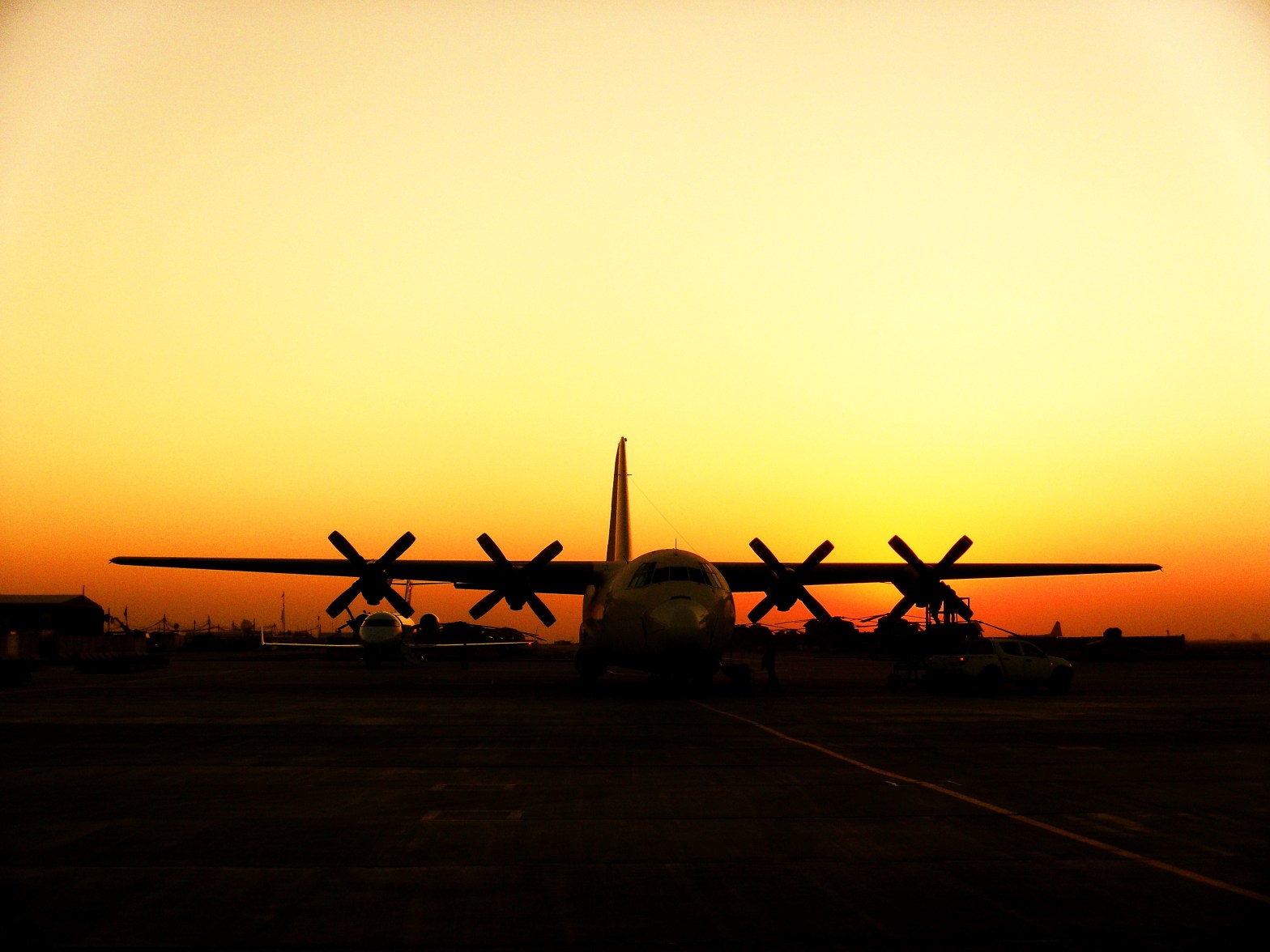
Two more rotations for the day, and it’s time to put the Herc to bed. The days minor snags are tended to, a wheel changed, oils uplifted, fuelling and loading carried out, and we are ready for tomorrow. As the crew transport, a 20 year old VW with no windows, arrives to take us to the camp, I take a backward glance at the mighty Hercules, and the setting sun, turning the horizon bright red, burns an indelible image of that squat monster, sitting quietly on the apron, onto my retinas. I know this is an image I will see many times as I drift of to sleep.
A few beers around the barbeque, check the camp beds for spiders and other bugs, mosquito nets set and it is time for a well-earned rest for the team. Malaria, snakes, scorpions, spiders; all these are everyday problems in “Loki.” Nevertheless, the work is exciting and challenging, and the sense of having achieved something worthwhile, while seeing acres of starving people, is a humbling experience.
Submit your own story
Please submit your own stories and images either by email to wkruger@safair.co.za or by uploading them using our online submissions tool. Click the appropriate option below.

