Remembering my Colleagues

I need to mention some of the people, past and present – and in no particular order, with whom I have had the pleasure and privilege to work. Please excuse me if I’ve missed anyone out. That can be attributed to (a) a shortage of paper and, (b) a shortage of memory space!

Pilots / Co-pilots :

Piet Strydom, Jeff de Jager, Mike (Colonel) Frost, Felix vd Merwe, Bugs van Rooyen, Wessie Wessels, Dorian Shone, Nick Duff, John Upshon, Steve Meyer, Malcolm Mounter, Klaus Gesell, Malcom Wilson, Mark Machanik, Mike Tetley, Brett Gebers, Nick Hayter, Chris Hue, Peter Ovenstone, George Leslie, Peter Harvey, Dick Richards (1976-1988, 1996-2001), Cliff Jones, John Stols, Mike Migdoll, Ian Rose-Martin, John Wilkinson, Lappies Labuschagne, Hendrik vd Westhuizen (1975-2017) Dennis Gorge, Gary Gorge, Ian van Breda, Wally Bacchialoni, John Pillans, Dennis Fortune, Paolo Massolini, Terry Eleftherio, Bryan Davis (1970-1990, 1992-1993), Peter Bocking (1976 – 1990, 1991 – 1994, 1999 – 2012), Carlos Martins, Steve Cox, Koos Loock, Carlos Martins, Dirk v Eeden, Marius Bergman, Gerrit Worst, Alison Moore, Vic du Plessis, Johan Lotter, Clive Davis (1988-2015), JC Linde, Tony Evans, Barry Barnard, Roes de Villiers ( 1974 – 2007, 2010 – 2019) , Geoff Strike, Andy McLennan, Keith Watkins, Billy Preston, Andre le Uys, Anjo du Preez, Ian Ceronio (1977 – 1988), Dassie D’Assonville, Bruce McNicol, Johan Steyl (snr), Johan Steyl (jnr), Louis Steyl, Don Burnett (snr), Don Burnett (jnr). Martin Morris,

Then the guys who did the work (Navigators) :

Roy Immelman, Cas Stoop, John Huson (1973-1981), Louis Taljaard, Jan Lensley, Louis Cronje (1974-1984, 1991-2006), Pat Casserly, Tobie du Toit

Then the other guys who sat in the middle (Flight Engineers):

Bob Ward, Vic House, Chas Hartridge, Robbie (nightstop) Rautenbach, Faan Steenkamp, Barry Fourie, Kevin Tocknell, Grant Webster, Andy Anderson, Koekies Koekemoer (1976 – 2007, 2011 – 2015, 2016 – 2018), Brent Manson, Johan de Beer, Dolf Kuhn, Andy Anderson, Wessie vd Westhuizen, Duggie Schroeder, Neville White, Boet Fraser, Brian Carroll (1982 – 1993), Neil Wagner, Jack Landzaad

Then the Loadies :

Dewald Ludik, Darryl Jooste, Gary Heap, Reinier Boshoff, Kimo Leuvinnink, Clive (Tangles) Chapman (1980 – 2018), Cornel Buitenday, Christo Strauss, Darrell O’Kelly (1983-1993, 1998 – 2006), Sydney Saayman, Elyaas Parker, Tony Hlongo,

 And the “Hosties” : Francis Keyter (Kapp) , Anneke v Tonder (v Namen) (2987 – 2992, 2002 – current), Tracey Robb ( 1980 – 1990), Gill Gardiner, Sharon Golding, Cher, Michelle Pheiffer,    

And the people on the ground….

Hugh Flynn, Dave Andrew, Ralph Boettger, Anton Lombard, Koenie vd Walt, Derik Smith, Ian Price, Eric Visser, Chris Bester, Dennis Middlebrook, Benny de Jager, Daan Smit, Elmar Conradie, Pieter Richards, Wimpie Davidson, Alec Anderson, Andre Theron, Rob (“brother”) Butler, Rob Heuer, Mike Gibb, Jim Keating, Jannie Engelbrecht, Robin Thompson, Tommy Thompson, Graham Rochat, Norman Bruton, John Somerville, Eric Bodenstein, Sam Choma, Sherylene Patel, Japie Truter,  Mitzi vd Merwe, Darren Cox, John Rawl, Philip Meyer, Anabela Ribeiro, Joanne McCullagh, Pat Carmody, George Bessinger, Basil Kaschula, Greg Kaschula, Matt Herman, Marthie v Rooyen, Louis du Toit, Lindie v Zyl, Eswee Vorster, Obert Chakarisa, Dumisani Mtombeni, Alta vd Merwe (1980-2007), Theon Pretorius, Morne Erasmus, Mark Clothier, Ivan Venter, JJ v Zyl, Cornelis Schoonderwoerd, Gerrit Terol, Ian Duncan, Deon v Niekerk, Dennis Parker, Wendy Smit, Musa Hlale, Adrian Parker, Hein v Staden, Charl Cilliers, Ethienne Julian, Alan Turner, Graham Roderick, Lionel Rafferty, Tweedie Reid-Daly, Marion Ryan, Marlouise Booyse, Deidre Janse v Rensburg,  Philemon Kutumela, Albert (Stop-light) Futane, Isaac Mokoena

A number of the people listed progressed to other positions during their careers at Safair. I have not shown that.

The Hercules crews are a breed of their own as the environment within which they have to operate, really requires flying by the “seat of your pants”. The camaraderie amongst them is unmatched and along with other ground staff who joined as the company grew and grew, Safair was made and known as a famous and world-renowned operator.

Submit your own story

Please submit your own stories and images either by email to wkruger@safair.co.za or by uploading them using our online submissions tool. Click the appropriate option below.
Journey to the Bottom of the World

Contribution from Neville Desselss

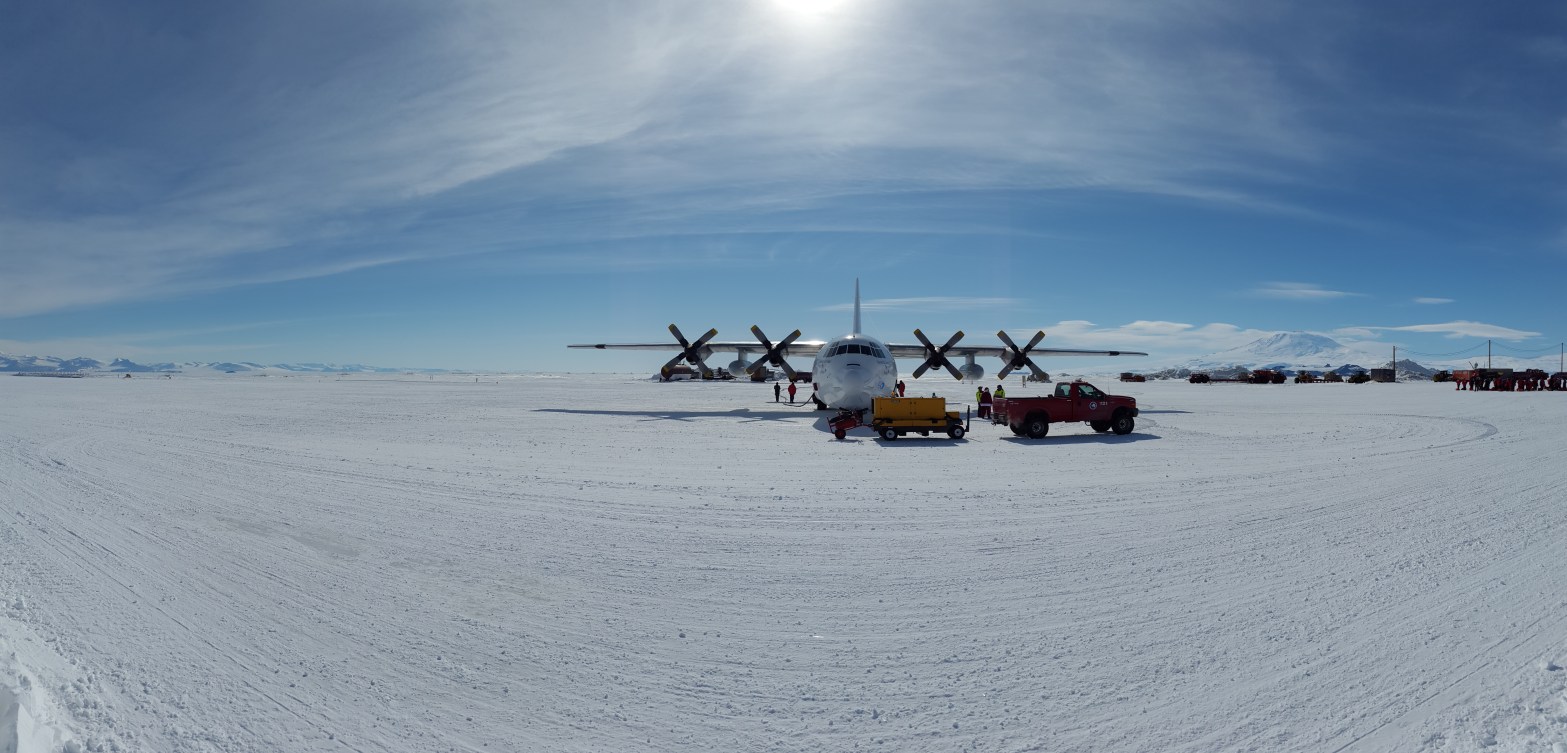
In 1993 we were contracted by a company called Adventure Network International (ANI) who needed to fly to Antarctica, which would turn out to be one of of the major highlights in Safair’s history. 

I was working in the Marketing section at the time when I received a telephone call from a lady by the name of Anne Kershaw, who owned the company. ANI operated charter flights from Punta Arenas in Chile to their base called Patriot Hills, in Antartcica.

At the time ANI had been using a DC6 aircraft, but they required something faster and more reliable.

The compnay accommodated adventure seekers who would do various activities in Antarctica like climbing the highest, Mount Vinson, which peaked at 16,000feet above sea level. Folks would also trek to the South Pole and visit the Emperor Penguins.

Understanding the scope I ran up to the Nav section and asked them to do a “quick” sector analysis in order that I could provide a quote. The team there gave me a rough figure of about 12 hours 30 mins for a round trip. I added a couple of dollars extra and provided the quote. Next thing I new, Anne Kershaw had arrived and the charter was confirmed for six weeks during the Antarctica summer season which stretches from October to December.

The crew for the contract were Captains Wessie Wessels, and Dennis Fortune, with First Officer Kevin Rogers, and Flight Engineer Brent Manson and Koekies Koekemoer

Our first flight went off without a hitch. Just after returning Captain Wessels was contacted by Anne to advise that the DC6 shed previously used had tragically crashed near Punta Arenas and she urgently required a Search and Rescue flight be undertaken as soon as possible because there were injured survivors.

The crew took minimum rest and departed on this rescue flight which they did with great aplomb. There was plenty of newspaper coverage around the mission.

We continued with ANI for a number of years after that, operating from Punta Arenas to Patriot Hills.

ANI ultimately got involved with the Italian Antarctica Expedition (ENEA / PNRA). Our base moved from Punta Arenas in Chile to Christchurch in New Zealand, from where we operated to an Italian Base in Terra Nova Bay which is now called Mario Zuchelli.

We started that New Zealand operation in mid October 2001 to early December the same year and took on the contract annually. In the end, the 2017 operation sadly turned out to be the final one. As we were preparing for the 2018 mission, the SACAA threw a spanner in works in respect of EDTO / ETOPS and we were no longer permitted to complete the flights.

Thankfully, after so many years of being involved, I got the opportunity to go along on the last operation in 2017. It was an experience not many people will have and I am extremely grateful to have had the opportunity.

The crew on that last flight were Captains Marius Bergmann, Johan Lotter, and Roes de Villiers. First Officers were Leane Gilmour and Anjo du Preez. Our Flight Engineers were Wessie vd Westhuizen, and Andy Anderson. Load Masters were Sydney Saaiman and, Wayne Edwards. The Technical team was made up of Tony Lai and Morris Lekala. Our Project Manager was Hein van Staden with Ground Handling Manager Dewald Ludik, and myself, Neville Desselss.

Submit your own story

Please submit your own stories and images either by email to wkruger@safair.co.za or by uploading them using our online submissions tool. Click the appropriate option below.

Living the High Life in Angola

Contribution from Neville Desselss

During the Angolan bush war, the National Union for the Total Independence of Angola (UNITA) was supported by the South African government, and our Hercules was chartered to transport Aid to their teams up in Angola. Their headquarters were in Southern Angola at a place called Jamba.

I was the contact person for UNITA and dealt with a guy who went by the codename “Bravo Victor”. We would liaise to arrange the flights and other details, and we became well acquainted over the years.

Just after the war ended and elecvtions were due to be help, a Captain, Flight Engineer, and myself, were sent into Angola to undertake airfield inspections. I’ll omit the names of the others to protect the innocent! A couple of airfields there had been damaged during the war and we were sent to see if the Hercules could still land on the undamaged sections.

We hitched a lift on one of our Hercules and were dropped off at a very remote airstrip in Angola. There was no terminal building to speak of, no runway markings, aboslutely nada! As we arrived, people just appeared out of the bush, off-loaded the aircraft, and disappeared back into the thicket.

We climbed off to do our inspections and the Herc left us departing back to Johannesburg.

At that point we were totally “stok-siel alleen”, with no communication and no-one in sight. The only thing we were told was that a light aircraft would arrive to collect us and take us to the airfield where we were due to do our  inspections.

Eventually, after what seemed many hours, but was probably only one hour, we heard this aircraft approaching – it was a twin Commanche. The pilot got out, introduced himslef and told us he was to take us to inspect these airfields.

We had no idea who this guy was, but our options were pretty limited, so we hopped on board. The captain sat up front with the Pilot and the Flight Engineer and I took up seats in the back. Half an hour into the flight, one of the engines started to cough and splutter in a rather alarming manner.

As it turns out, the pilot had forgotten to switch tanks and, much to our relief, the issue was sorted out rather rapidly.

We did a number of airfield inspections and ended up at their “camp” on the banks of the Cubango River. The South Africans had built a clinic of sorts out there.

It was actually the most perfect setting. Cold beer was available, there were flyrods for Tiger fishing – it was an idyllic lifestyle.

The following day, we flew on to Jamba where we were met by UNITA officials, and I finally got to meet my contact “Bravo Victor”. Jamba was a bush village with no modern amenities or tall buildings – bush huts were the norm.

I was escorted to the VIP quarters. I was treated to a bedroom with a mosquito net and there was an en-suite shower. Hot water wan’t really required in the sweltering conditions, but the accommodations were really comfortable none-the-less.

Unfortunately, our Captain and Flight Engineer were not quite as fortunately. They ended up sharing a small hut, where they had to stand in a zinc bath and use a bucket to wash themselves! Needless to say that didn’t go down too well!

Submit your own story

Please submit your own stories and images either by email to wkruger@safair.co.za or by uploading them using our online submissions tool. Click the appropriate option below.

Speaking the Universal Language of Africa in Goma

Contribution from Neville Desselss

In 2002, the Nyiragongo Volcano at Goma erupted. Lava streamed into the town, causing devastation in its wake, and eventually reached the main runway of the local airstrip.

Safair was part of an organisation at the time called SAFREN, donated tonnes of aid to assist in the relief efforts. One of our Hercules was utilised for the flight which, in addition to the Aid, had members of the Press on board. Capt Wessels was the pilot and I had to go along as co-ordinator and paymaster.

On arrival Goma, I was taken, along with my briefcase containing Contingency, to the terminal building. There I was escourted to a dingy room. The door was locked behind us, and a group of armed guards wanted to know what was in the briefcase. 

They only spoke French, so communication was rather difficult, as I tried to explain that I needed to pay for a few things like Landing Fees and so on. These guys were not going to let me go until I started to speak the universal language of showing some green backs.

Thankfully, I was ‘released’ soon thereafter and made my way, rather rapidly, back to the safety of the aircraft with my briefcase and what was left inside!

Submit your own story

Please submit your own stories and images either by email to wkruger@safair.co.za or by uploading them using our online submissions tool. Click the appropriate option below.
Where’s the Jack?

Contribution from Neville Desselss

In 1993/4 we were the first South African registered aircraft permitted back into Kenyan airspace and were contracted by a Kenyan company (Phoenix Aviation), for a series of flights for the United Nations and World Food Program from Nairobi to Mogadishu and Baidoa in Somalia

The crew on that mission were Capt Wessie Wessels, F/O Tony Evans, F/E Alan Bosse, L/M Jack Landzaad, L/M Johan Odendaal and myself as Co-ordinator.

We arrived in Nairobi after midnight and stayed at the 680 Hotel. After a quick bite to eat from room service, we went to catch a couple of hours shut-eye as we had to commence our first flight early the same morning.

On that first flight, we were headed to Mogadishu West. Mogadishu Main was unsafe due to fighting amongst the warlords and clans. Onboard we had troops of one of the advance teams of the United Nations.

Mogadishu West was a dirt strip and quite busy with the inbound aircraft from Kenya delivering Khat: a stimulant drug that is picked from the Khat plant that is grown and harvested in Kenya. The Somali people traditionally chew on the leaves and buds which gives them short-term energy and concentration.

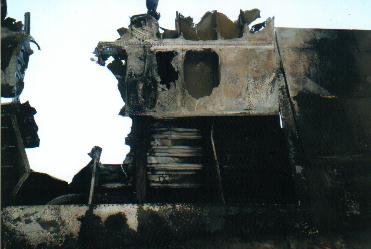
We landed at Mogadishu West and as the Captain started to turn in the dumbbell, so the RH main wheels sank into the verge.

We were stuck good and proper! The two inboards were not strong enough to get the aircraft out.

Now, the Sakkies with their Land Cruisers and machine guns were getting agitated and twitchy as we were blocking the runway and their Khat could not be delivered.

Eventually, the inbound (and outbound aircraft) landed and departed right over the Herc!

We then had another problem in that the fuel started to transfer to the lower wing which resulted in the outboard prop being rather close to the ground.

As a last resort, a plan was decided upon whereby a ditch would be dug deep and wide enough in order for the outboard to be started and all 4 engines were started. The aircraft “popped” out and we were free! Much to the relief of all including the local warlord!

The following day, we had a flight to Baidoa with aid for the World Food Program. After arrival, off-loading began, and during off-loading, we noticed the left-hand rear was deflating. No problem, we had a spare and went to get the jack. BIG problem! No jack!

Once again the Sakkies were riding up and down in their Land Cruisers with their machine guns. The Captain advised the World Food Program representative who was as nervous as anything that we shouldn’t stay there as it was not safe. Unfortunately, we had no choice and “Hotel Hercules” was to be our overnight stop.

I often recall us sitting outside the aircraft that evening watching the tracers flying through the sky.

Fortunately, we managed to contact Ops in Johannesburg via HF, who, in turn, contacted Southern Air Transport who were operating for the ICRC (Red Cross), to uplift a Jack from Nairobi on their flight the following day and divert into Baidoa to drop off the badly needed equipment and rescue us.

Submit your own story

Please submit your own stories and images either by email to wkruger@safair.co.za or by uploading them using our online submissions tool. Click the appropriate option below.

Mind the Spitting Snakes

Contribution from Neville Desselss

In the late 70s, early 80s, we were requested to wet-lease a Herc for an operation in what was then Zaire, now known as the Democratic Republic of Congo.

The Operations Manager at the time, Capt de Jager, Marketing Manager, Maurice de Robillard and I, were sent to discuss the potential operation with the customer. 

We took a Sabena Airlines flight from Johannesburg to Kinshasa, where we were met by the customer.

It turned out that the potential customer, Citoyen Tambwe Wa Lomami, was related to then-President Mobuto Sese Seko and obviously a wealthy man. He had coffee plantations in a place called Boende. They would grow and harvest the coffee there and then ship it by barge down the Zaire River to the port of Matadi where the coffee was loaded for shipping.

Unfortunately, his barges were being continuously being hijacked by rebels and pirates from across the river in neighbouring Congo Brazza, and he was wanting to fly product out.

After discussions on the operation, we were flown in his private QueenAir to Mbandaka, Boende where we landed on a terrifying airstrip called Boma. This particular airstrip has a sheer drop off a cliff at the end of the threshold and is located near the port of Matadi.

Our base for 6 weeks, was going to be Boende which was a village in the middle of the jungle. On the walk from the airstrip down to the village, the escort kept repeating “mind the spitting snakes, mind the spitting snakes”.

Our accommodation was extremely basic and quite how we were going to survive those living conditions with the disease, spitting snakes, and goodness knows what else was beyond me.

Thankfully, for some reason, the contract never materialised.

A couple of years ago in the early 2000s, our Herc contracted to the UN was tasked to undertake an airfield inspection at the same airfield in Boende. While our Hercs can go anywhere there are some places we maybe just didn’t actually want to go!

Submit your own story

Please submit your own stories and images either by email to wkruger@safair.co.za or by uploading them using our online submissions tool. Click the appropriate option below.

Going Nose-where

Contribution by Chris Bester and Fred Brons

Goodness knows there have been some interesting times in the history of Safair and we’ve had to employ some interesting tactics from time to time.

I recall an instance where we had provided technical support services to a local passenger operator who had fallen well behind on their payments on outstanding bills. After several written warnings fell on deaf ears we decided to take some fairly drastic action.

On return of their aircraft to Johannesburg, a team of technicians from Safair noted an immediate need for vital inspection of the aircraft’s nose wheel. It was decided that said nose wheel should be removed for scrutiny – scrutiny which would be concluded once the operator had proven that all outstanding funds had been paid and received.

Fortunately, the operator managed to produce the necessary payment in time and the nose wheel was refitted before the next flight was due to be operated.

Another adventure of a similar nature nearly didn’t turn out quite so well. A group of five of us headed up to Luanda for a series of tough meetings with a client who owed us some money. 

We managed to conclude the meetings and get the payment and set about on our way home. As we entered the immigration and customs hall in Luanda we were met by an official dressed all in white. He was seated at a small table with an injection syringe lying in front of him. Let’s just say that the syringe looked like it had been around the block a few times.

Our interpreter told us that he wanted to review our vaccination documents, but the problem was only three of us actually had documents. So the three of us that had cards handed them over for inspection and then two of us quietly slipped our cards to our two colleagues who were sweating bullets at this point.

The official scrutinized the fourth man’s document for some time before eventually accepting it. The last guy handed his card over and the official decided it wasn’t good enough. He reached forward for his syringe at which point we requested that we quickly just check that we’d given him the correct one.

The document was handed back to the official, this time with a small green piece of paper wedged between the pages. Suddenly the paperwork was all in order and we rushed into that aircraft with great relief!

Submit your own story

Please submit your own stories and images either by email to wkruger@safair.co.za or by uploading them using our online submissions tool. Click the appropriate option below.

Three Structural Achievements

Contribution by Chris Bester

The backbone of the technical department who do maintenance on Herc aircraft is the 

Structures Group. During my time we were very proud of the capabilities of our structural technicians and the leaders in this group were sent to Lockheed for Advanced Structures courses.

Three occasions where structural techs played a major role stand out for me. 

  1. British Airways appointed the Safair team to assist with a repair on the vertical stabiliser on the Concorde aircraft when it visited South Africa in the 1980s 
  1. Safair was the first company in Africa and the Middle East to perform passenger to cargo conversions on Boeing 727 aircraft despite competition from SAA and Denel in the 1990s.
  2. The repair of a Herc which crashed on a remote runway in Zambia during late 1990s. Several of the world`s largest Aircraft Maintenance Organisations were approached for assistance on this extensive repair, but nobody was up for the task. What was remarkable is that eight of the team of twelve technicians who managed the repair were ex-Safair trained technicians under the supervision of Kenia van Rensburg who was Super Attendant: Major Maintenance at Safair. There was very little infrastructure available in Zambia and all equipment and services had to be positioned by truck. Temporary repairs took one month to complete in Zambia before the ex-Safair pilot, Captain J Wilkenson, ferried the aircraft on 3 engines from Zambia back to Luanda where permanent repairs were carried out. The permanent repairs took 10 months to complete in Luanda.

Submit your own story

Please submit your own stories and images either by email to wkruger@safair.co.za or by uploading them using our online submissions tool. Click the appropriate option below.

Shake Bottle Well Before Pouring

Contribution by Chris Bester

In aviation, as in life, small things can sometimes make a huge difference. We learnt this lesson in an interesting way thanks to some large drums of engine oil.

At one point in our operations, Safair used to purchase engine oil for the Herc engines in two pint tins. Due to sanctions we were forced to change our suppliers and the new suppliers we found didn’t produce these smaller tins and so we were required to purchase our oil in large 44-gallon drums.

Around the same time, there was an operational need to increase the operating altitudes. Necessary approvals were granted and ops implemented the new procedure but there was a problem: the aircraft simply couldn’t achieve the new altitude due to a loss of engine oil pressure.

Many weeks of intense discussions followed as we tried to figure out what the problem was. Physical inspections were performed on engines and systems but absolutely nothing yielded any positive findings.

Eventually, we made a breakthrough.

The engine oil used in the Herc engines includes an anti-aeration additive of 2%. This additive prevents the oil from forming bubbles at high temperatures and pressures. This is essential because bubbles in the oil will result in reduced engine oil pressure.

The trick is that the anti-aeration additive tends to settle in the oil and so whenever the oil is topped up, it’s important to shake the tin to ensure that the liquids combine and that the dosage is correct. Since we were now getting oil in these massive 44-gallon drums, nobody was shaking them, and so the anti-aeration additive was being left in the bottom of the drum. The result was these low engine oil pressure issues at higher altitudes and the solution was pretty simple: “shake before pouring”.

Submit your own story

Please submit your own stories and images either by email to wkruger@safair.co.za or by uploading them using our online submissions tool. Click the appropriate option below.

Mortar Attack in Ethiopia

Contribution by Chris Bester

Our adventures on the Hercules aircraft have seen our teams operate in some pretty severe circumstances, and perform some interesting repairs as a result.

Rapid decent operations meant that flap track replacements were a pretty regular task and bad runway conditions often resulted for pork chop fitting replacements.

One interesting repair job followed a mortar attack in Addis Abba in Ethiopia, which resulted in pretty severe damage to one of our aircraft as a result of holes created by shrapnel. 

Proper repairs had to be done back in Johannesburg, but the challenge was to get the aircraft down from Ethiopia to Johannesburg for those repairs to be carried out. Safair sent a technical team up to meet the aircraft where we patched the holes as best we can, mostly plugging the holes with high-speed tape. We then had to ferry the aircraft back at low altitude all the way back to Johannesburg where the final repairs could be done.

Submit your own story

Please submit your own stories and images either by email to wkruger@safair.co.za or by uploading them using our online submissions tool. Click the appropriate option below.