Contribution by Chris Bester
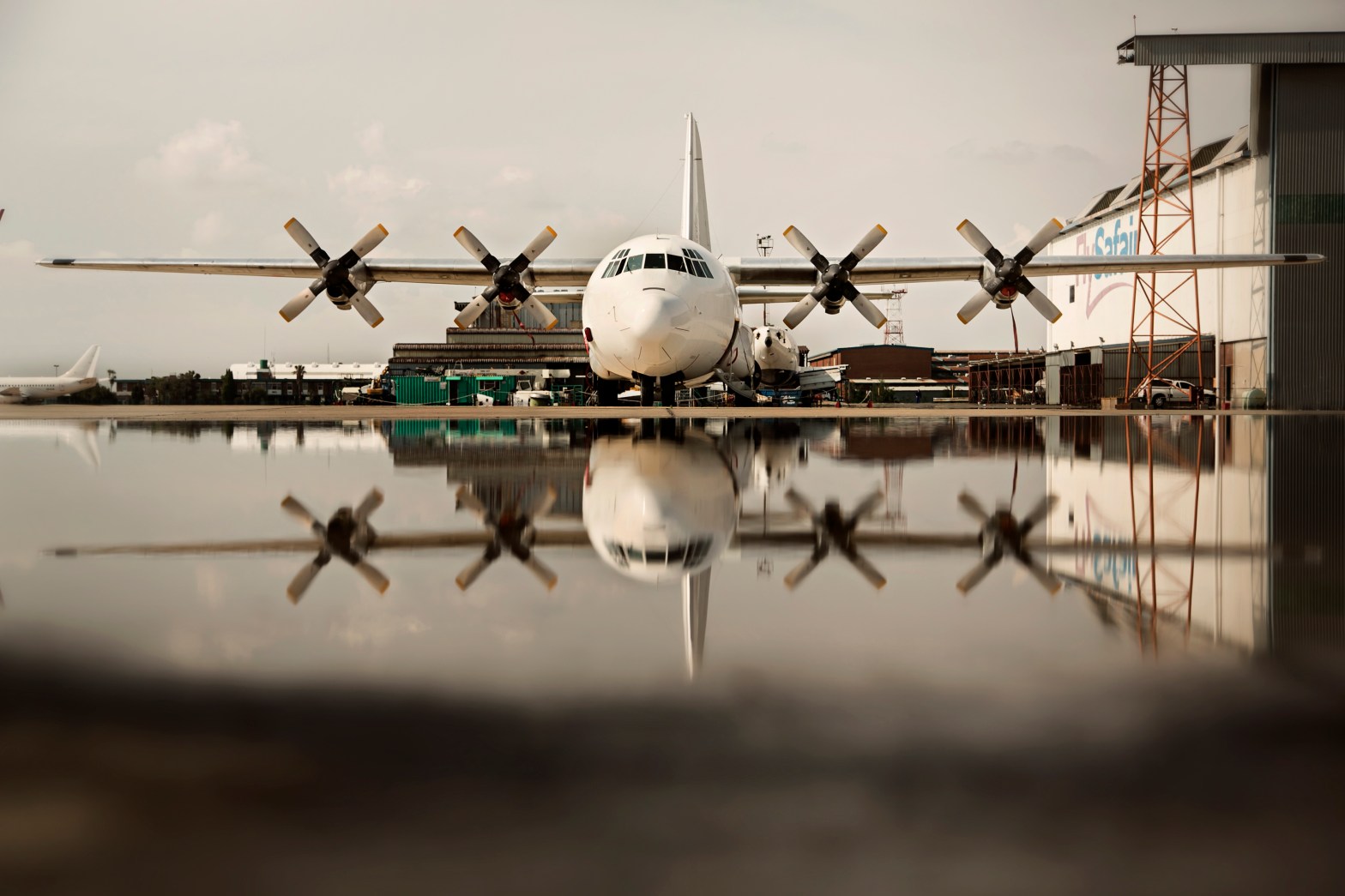
In the mid 1970`s the Safair Board of Directors decided to expand the fleet of commercial
L382 series from eight to sixteen aircraft.
At that time the board had also chosen to modify 4 of the new aircraft such that they were able to perform dual roles as a passenger aircraft or freight aircraft, or a combination of the two. These aircraft were to replace the DC4 passenger aircraft which were operating a contract for the Witwatersrand Native Labour Association, known as Wenela, to transport Malawian workers to work on South African mines.
I was appointed as the Safair representative at the Lockheed Georgia company in Atlanta Georgia to manage the acceptance of 8 new Hercs and to oversee the conversion of the aforementioned aircraft from freighter to passenger configurations.
After an aircraft was manufactured, all systems had to be tested on the ground and thereafter a number of in-flight tests were carried out by the Lockheed test pilots. Each aircraft had to undergo a final test flight before an Acceptance Flight was done for the customer.
During the final test flight of aircraft number 16, a three-engine landing had to be performed because a flap drive dislodged on the right-hand flap resulting in a skew position of the flap, which obstructed the aileron’s capacity to move freely. The result was an emergency hard landing.
As the aircraft taxied back to the apron I noticed that the right-hand flap was hanging skew. I inquired as to the reason for it and insisted on a full report of the incident.
An in-depth investigation followed and it was found that the technician who was working on the flap drive was about to fit the last part in the system, a chain cotter pin securing the link on the two ends of the chain, when the lunch siren announced lunchtime. He immediately left everything and went on lunch. On return to the job he forgot to fit the cotter pin and signed the job off.
The vibration levels on propeller-driven aircraft is very high and during the test flights on this
particular aircraft the chain attachment link dislodged and the chain fell off the sprocket disconnecting the flap drive from the primary drive. The result was that the flap drive on the one side of the flap performed as designed, but the flap drive on the other side of the flap was disconnected and did not activate any movement of the flap on the other side. The flap extended askew and entered the aileron movement space blocking the aileron from moving freely in its space.
In the case of a 3 engine landing, the control surfaces require undisturbed maximum movement to safely control the aircraft.
It’s remarkable how one tiny lapse in concentration can have such a massive effect. It boggles the mind to consider the likelihood of similar incidents today with so many distractions, like mobile phones.
Submit your own story
Please submit your own stories and images either by email to wkruger@safair.co.za or by uploading them using our online submissions tool. Click the appropriate option below.
 Safair Herc Tales